Note: While students were accompanied on their National Palace Museum tour by a professional guide, Keefe not only relays some of the observations made by the guide, but injects his own personal observations in this blog post on Ceramic Art. Enjoy!
In our first phase of our tour to the Palace Museum, our guide told us about the various Chinese dynasties. These periods were not static, but very fluid and dynamic time periods. The various artifacts on display were moved from Southern China during the Japanese invasion and brought over to Taiwan during the civil war. These pieces (especially the pottery) showed how China followed various trends and influences throughout history.
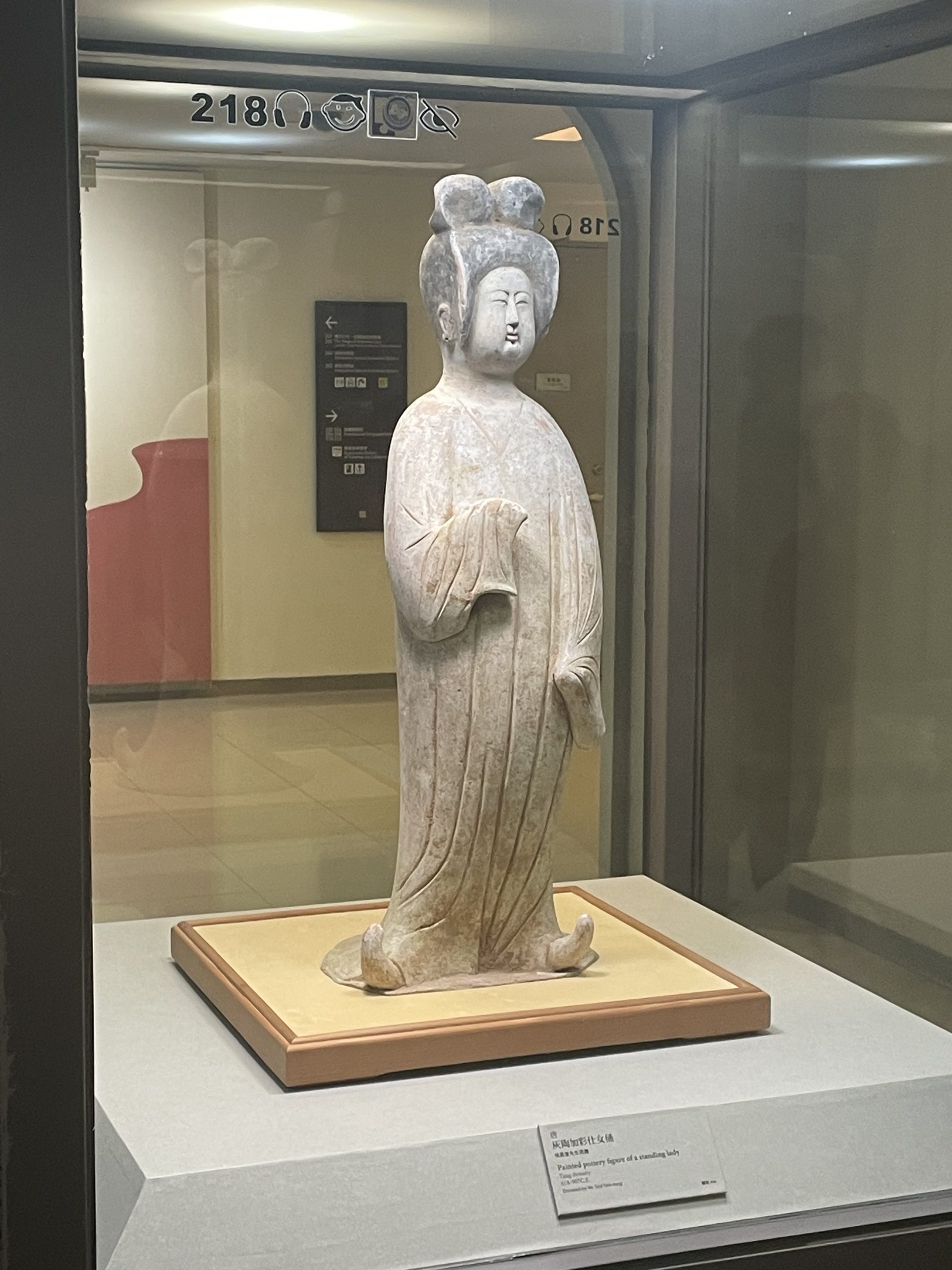
The first piece we saw was a ware sculpture of a woman who lived during the Tang Dynasty (618-907). Her figure shows how the Tang valued larger women. Note that her hair is a actually a wig, a fashion trend that was popular during this period. The shoes she wears have pointed tips of Arab influence. This influence would last long into the Song Dynasty (960-1279) which was heavily influenced by the Taoist faith.
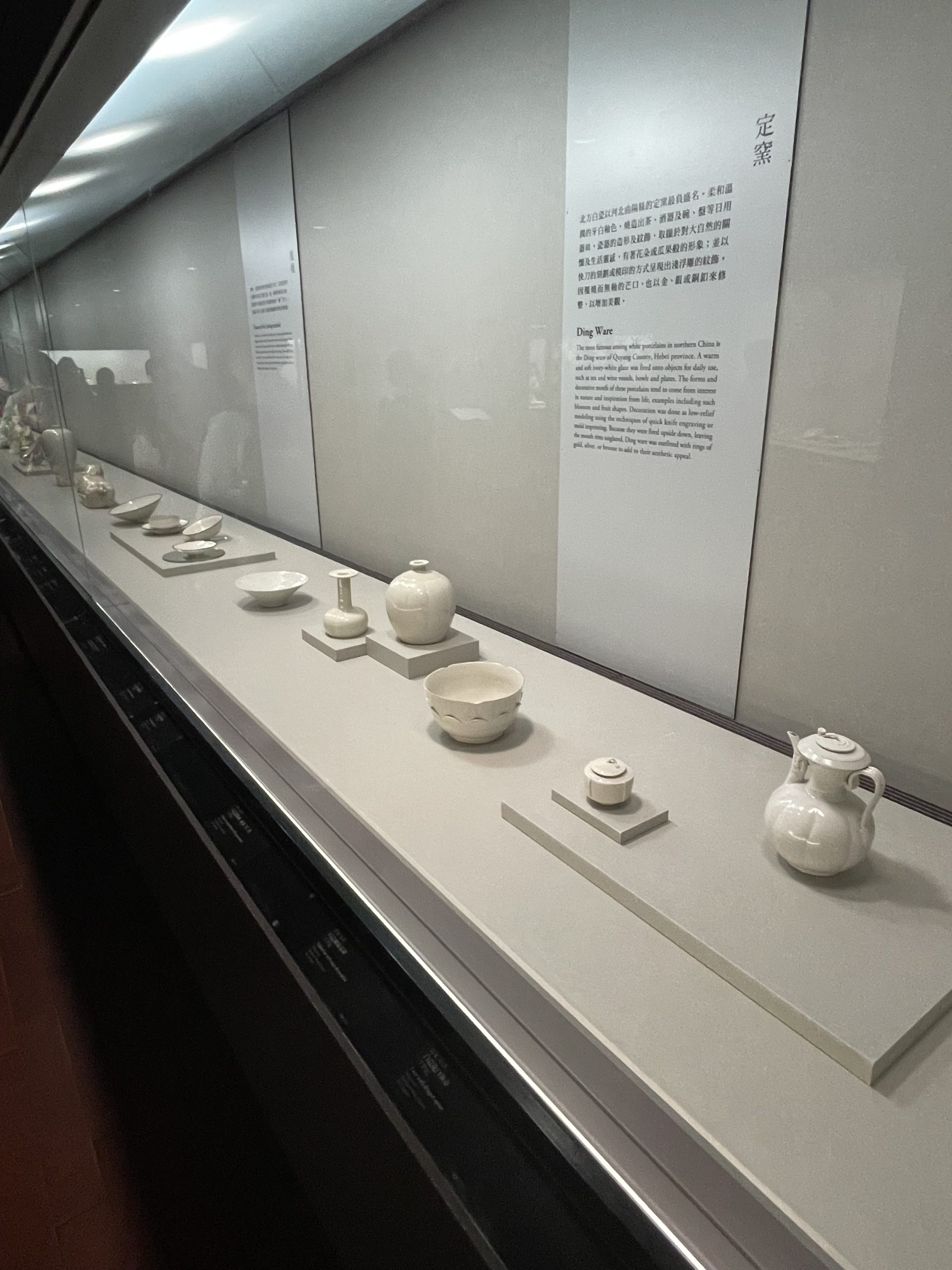
During the Song Dynasty, artists would favor natural forms of nature and the real world over the abstract. During this time period, pottery depicting melons or lotuses were common. This dynasty was also influenced by the Muslim culture as it inspired Song artists to add more angular shapes to their pottery as interactions between the cultures via the Silk Road increased. This increased cultural exchanges with nearby civilizations that the Tang dynasty had developed prior.
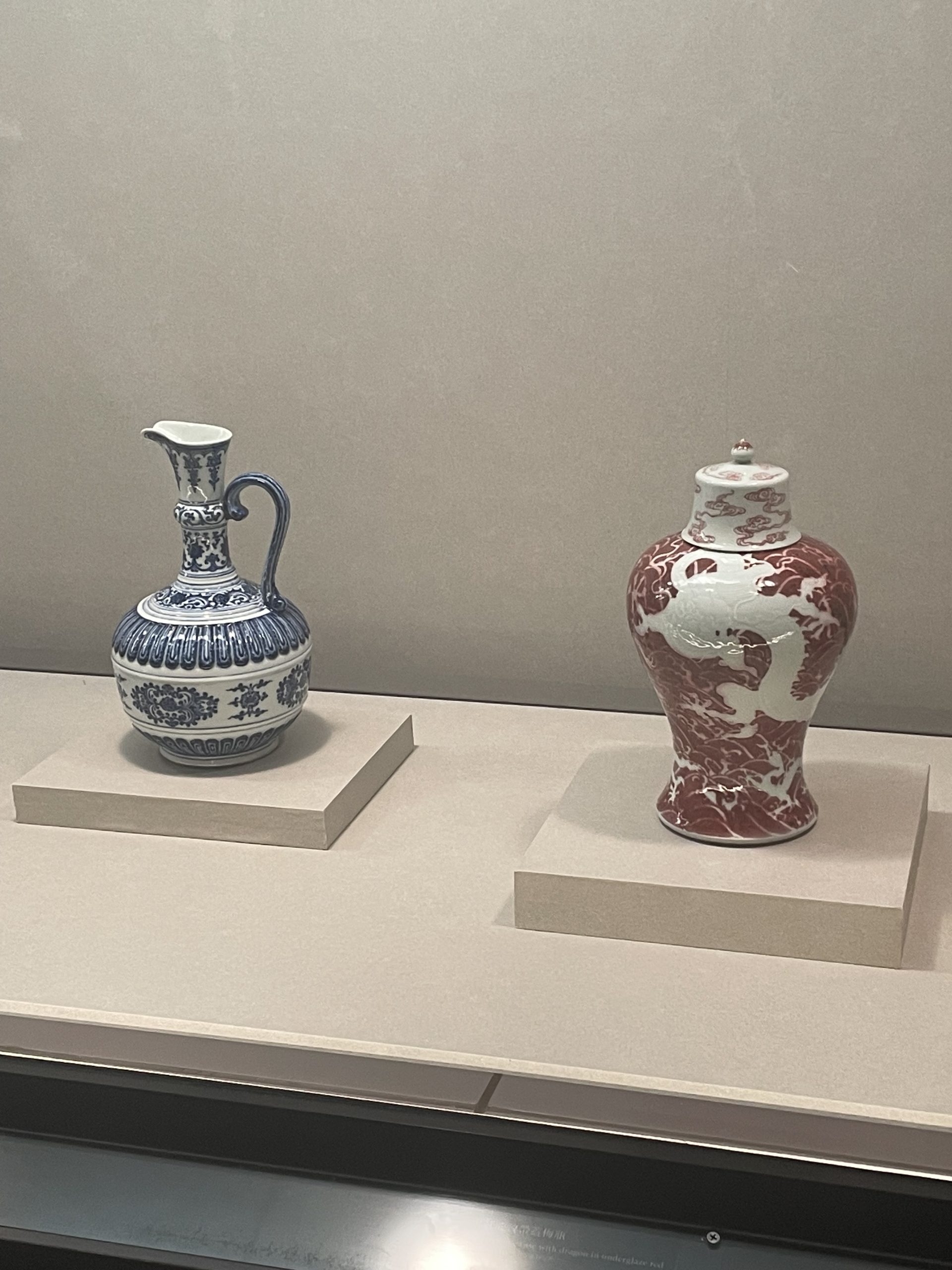
The Ming Dynasty (1368-1644) may be the most famous period for ceramic arts in China and Taiwan. The deep blue glaze synonymous with the time period was achieved by infusing cobalt into the pottery. Motifs like dragons on white porcelain was a style that became famous in the west. This technique saw the addition of copper used to act as a red hue underglaze so as to prevent the piece turning green by sealing off any oxygen exposure.
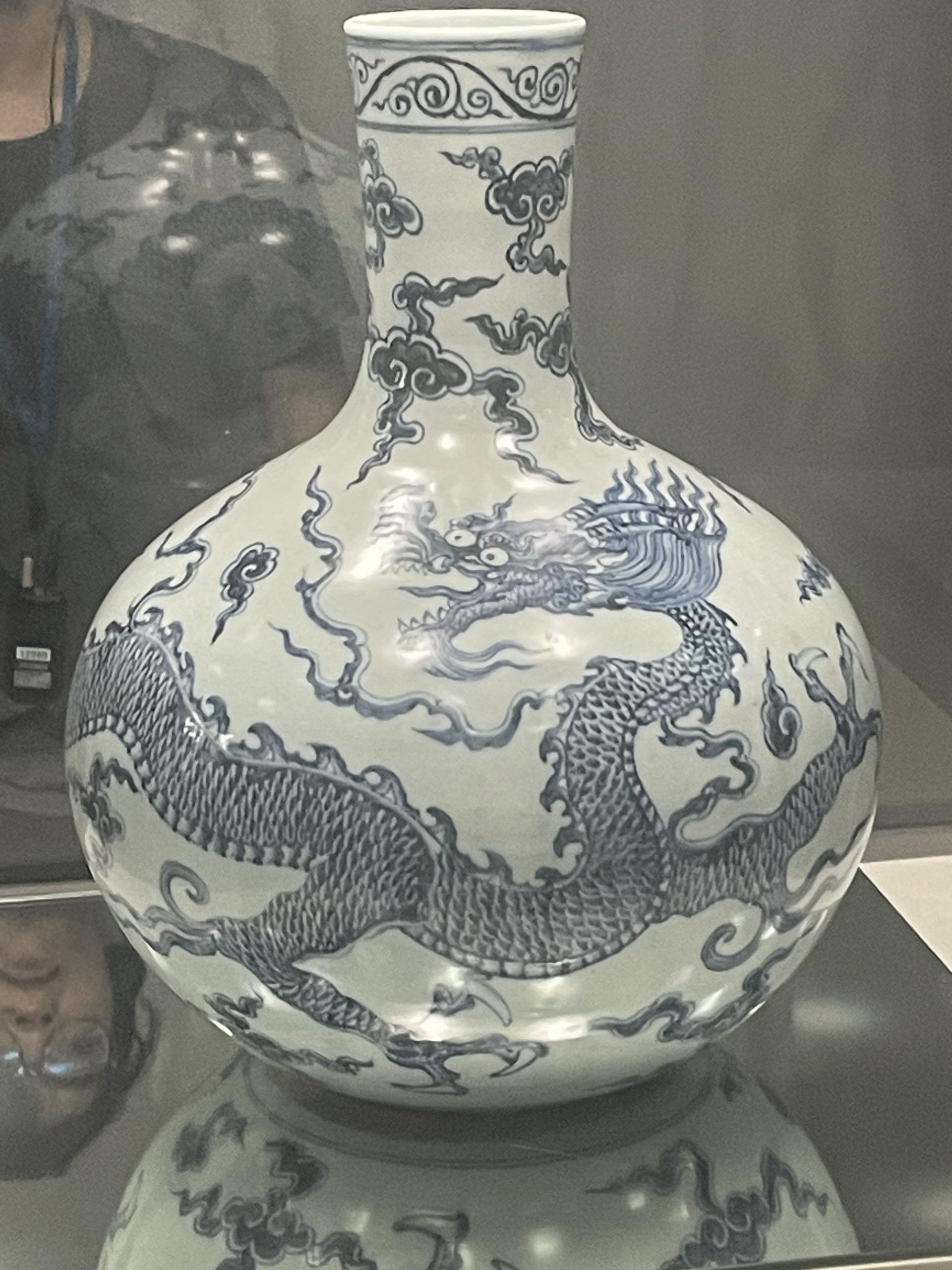
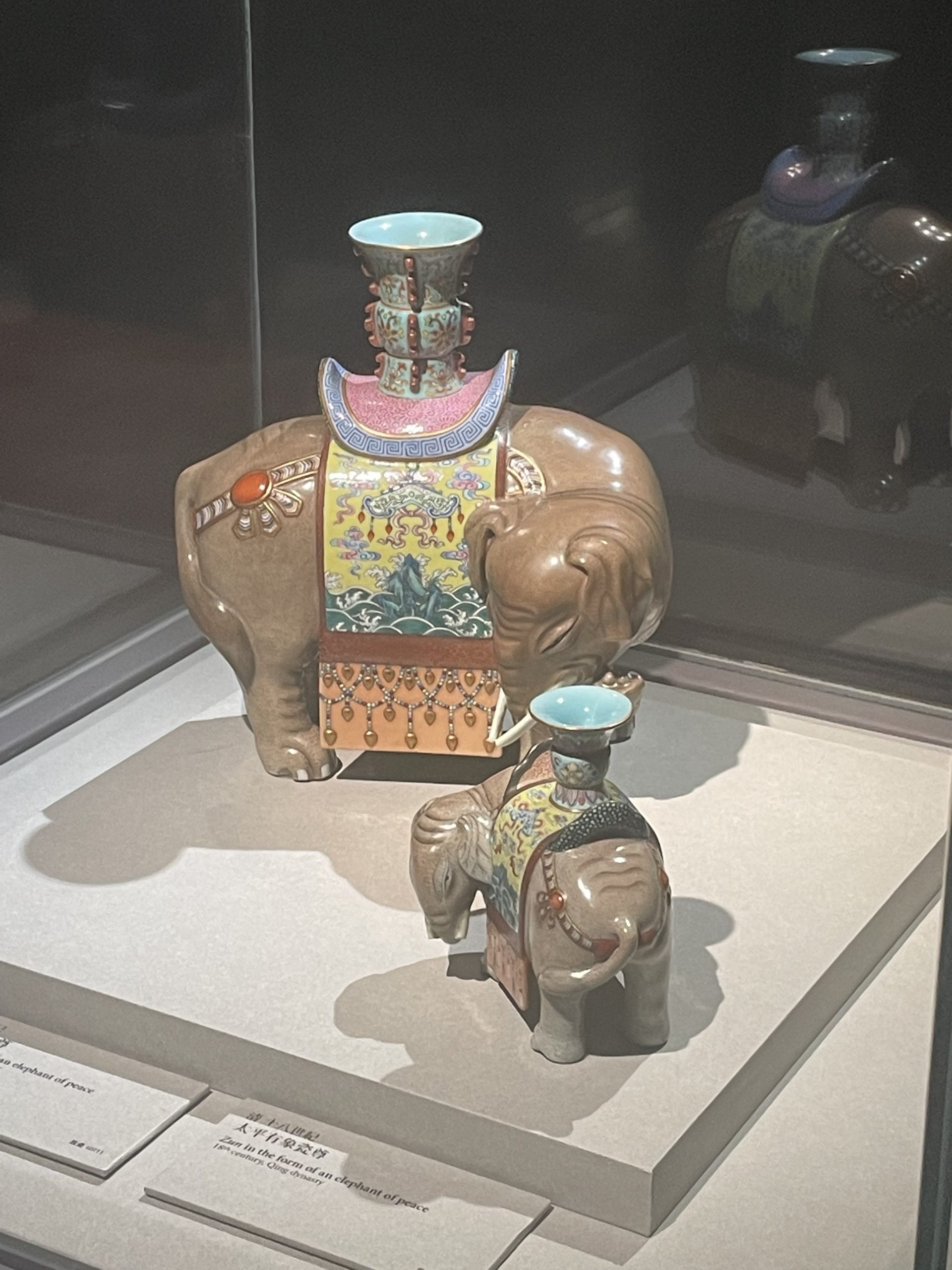
The Ming Dynasty was eventually overthrown by the Manchus, thus ushering the Qing Dynasty (1644-1911). Heavily influenced by Buddhist religion, Iconography and colors were valued.
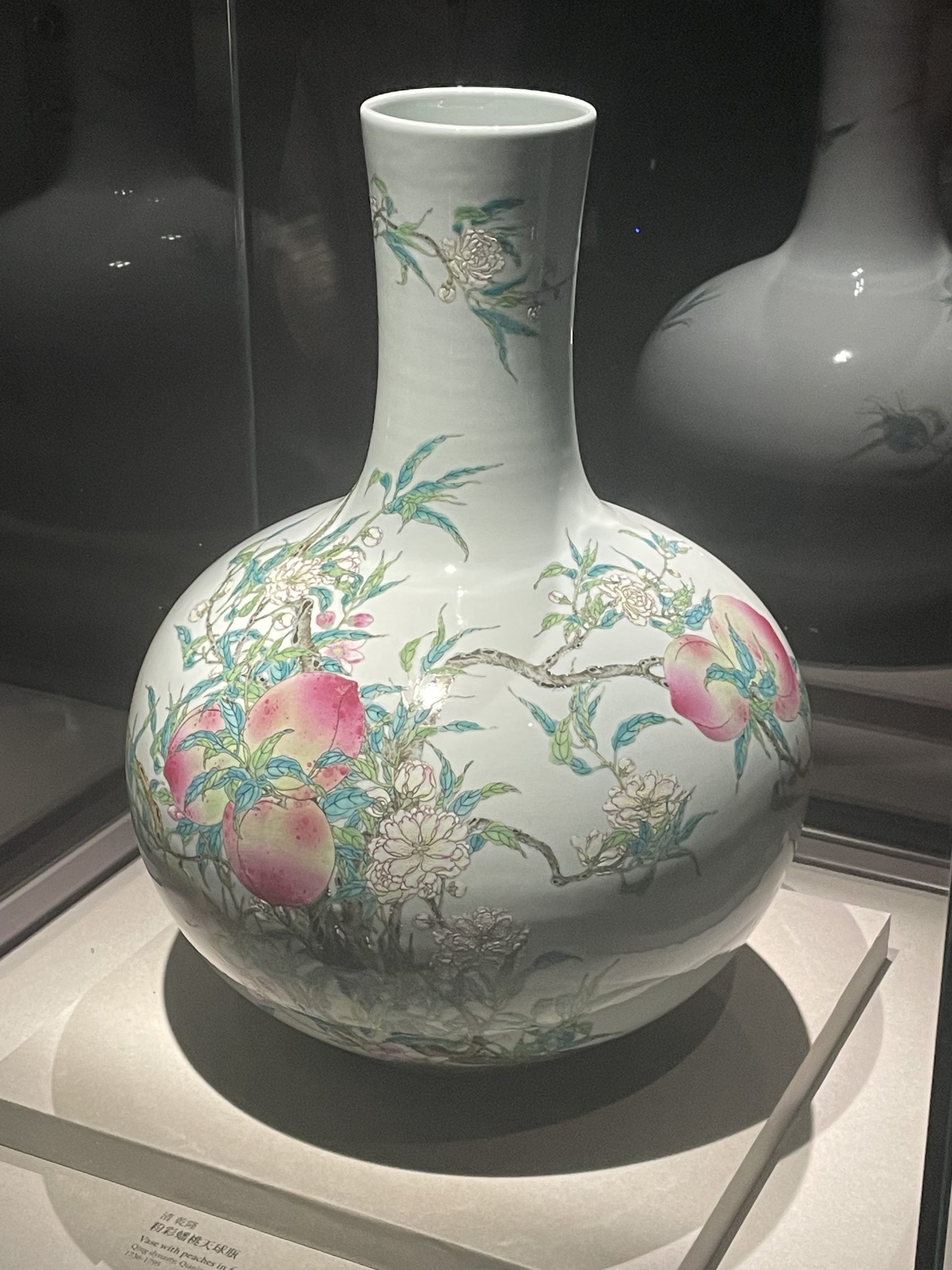
The final piece that caught my attention was the use of homophones as wordplay in art. In this final piece below, the use of peaches represents longevity and was a common motif used in art and storytelling. The piece contains nine peaches, which is also a lucky number during the period, adding luck or “Auspiciousness” to the theme of immortality.
The visit to the National Palace Museum shows that pottery and ceramics were powerful expressions of trends and values during each dynasty. While pottery certainly had everyday uses, these pieces are cultural works of art in their own right.





Leave a Reply