
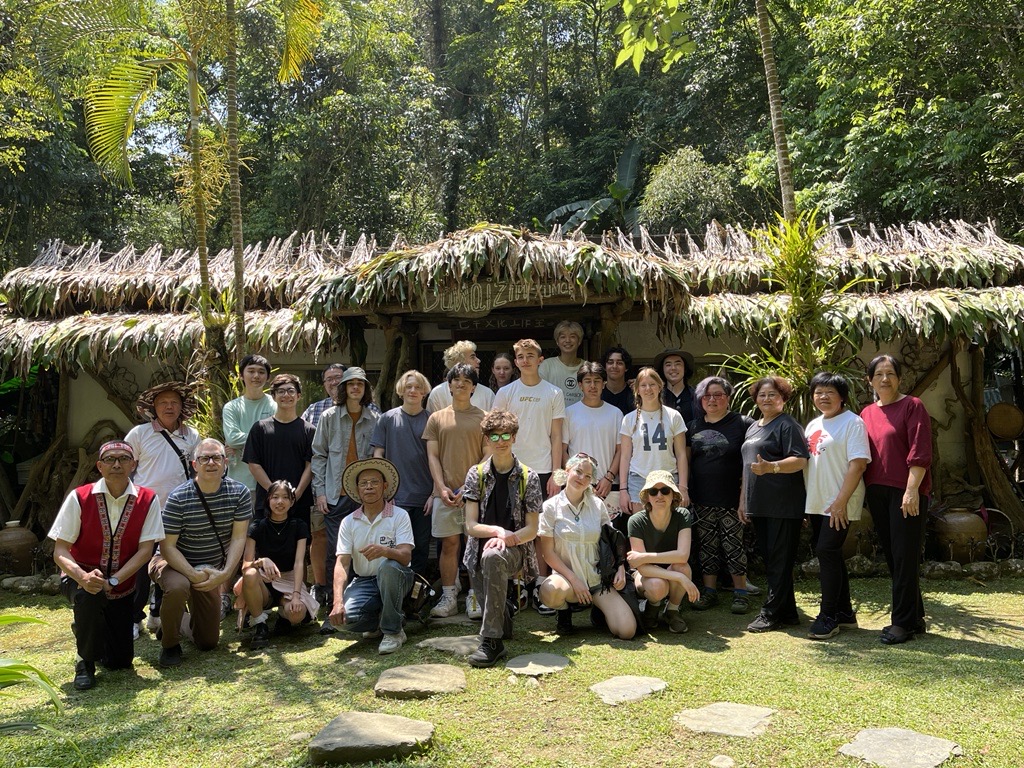
It’s pretty well known at NWS that I’m a seasoned world traveler, and even before spring break my Chinese 3 and 4 classes have been practicing a tricky grammar pattern where I’ve used “I’ve been everywhere!” as a sample of this phrasing. That being said, this small island of Taiwan is actually my favorite place to travel in all of East Asia, and Taipei one of my favorite urban hangouts. It’s hard to explain the appeal of this Taipei to me. For one it has to be one of the most fantastically ugly cities in East Asia. Unlike Tokyo, Kyoto or even Beijing and Shanghai, Taipei has little of the grand ancient architecture or modern 21st century urban vibe of other Asian metropolises, even with Taipei 101 and the Chiang Kai-shek Memorial complex. The city is more easily generalized by its grey and unappealing buildings spread through the Tamsui Valley in north Taiwan (which is what Taipei – 臺北 Táibĕi – literally means, “the north of Taiwan.”) Instead, it’s the sense of Chinese culture that has been carefully preserved here, in the polite, gentle and friendly manner that you will experience from people, as well as a love for good living – which is most obviously exhibited in the wealth of cheap and amazing food available.
I first lived in Taipei nearly 40 years ago (ack!) in 1987-88, as a 19-year-old during my junior year abroad. What’s funny about coming back to Taipei now is my perspective on it. While I was still a teenager, Taipei seemed like a huge metropolis and teeming with people, cars, motorcycles, stores, restaurants, things to do…it was quite overwhelming (perhaps some of our kids experienced a similar feeling?). On the other hand, Chinese cities on the mainland were still relatively in the dark ages – even a huge city like Shanghai seemed relatively dormant in the late 1980s. Now, everything has flip-flopped: mainland cities have boomed and developed at such a rate since the start of the millennium, it’s hard to quite catch one’s breath with the changes every time one goes there. To me at least, Taipei still feels like Taipei and, in retrospect, seems rather quaint now. The city itself is really not all that large, nowhere near the huge scale of other major Asian cities, and even with some modern changes, the place still feels a little frozen in time to me.
This is ultimately a good thing. The people in Taipei are still the same old 臺北人 Táibĕi ren, showing us warm welcomes and amazing hospitality at every turn. This was especially true at the two schools we visited, AHSNCCU in Taipei and CNASH in Puli, and it was clear that our visit was exciting and even a bit nerve-inducing for the students there. I was so impressed at our NWS kids’ ability to jump right in and engage with new groups of students their age in our daily interactions with them, either at the school or joining us on excursions and activities in Taipei and Puli.
However, for all of the amazing experiences our group of 18 students and three faculty have had in and around Taipei – and there have been many, our days have been absolutely packed! – what will stand out to me most was what just took place in our last couple day here, visiting with Aboriginal people connected to the CNASH school and with their Presbyterian church which stands just across the city’s main gate. During our school visit at CNASH, our students were greeted with a formal welcome by CNASH students showing their best military training in drill formations. At the end of the day, students with Aboriginal backgrounds treated us to songs and dances while decked out in traditional dress. These students took the time to identify which Aboriginal peoples they came from – there are 16 Aboriginal clans recognized by the ROC government on Taiwan, and the student group represented five of these groups. It was clear that even while dancing to modern songs in their traditional dress, these young people took strong pride in their distinct cultural traditions.
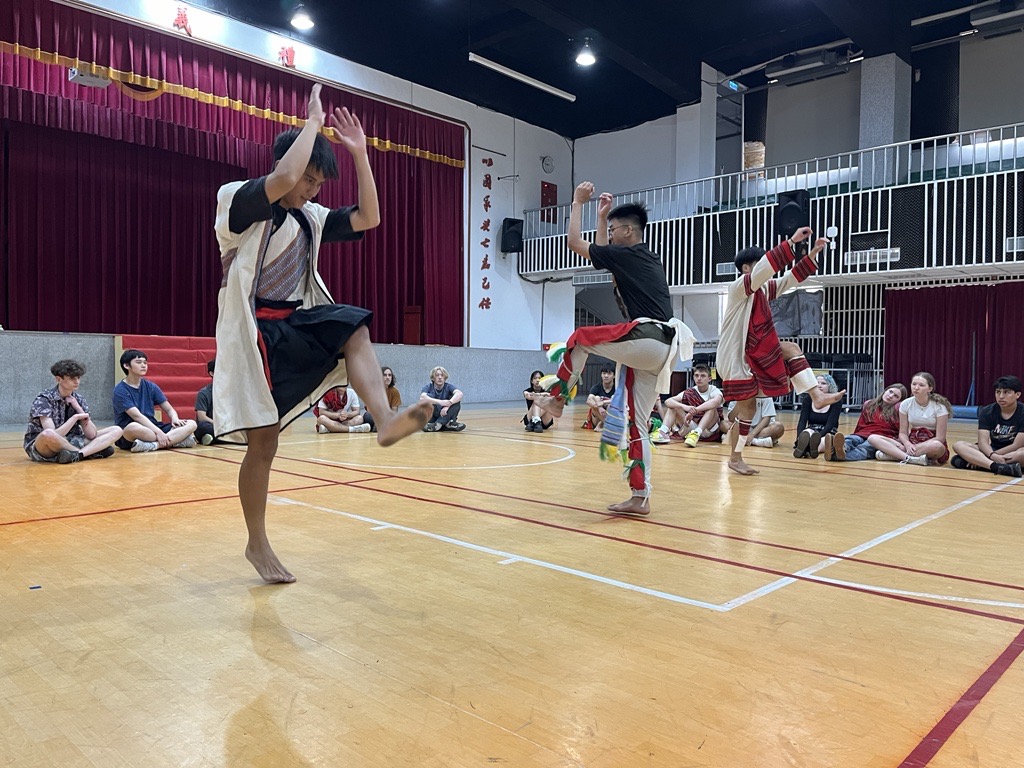
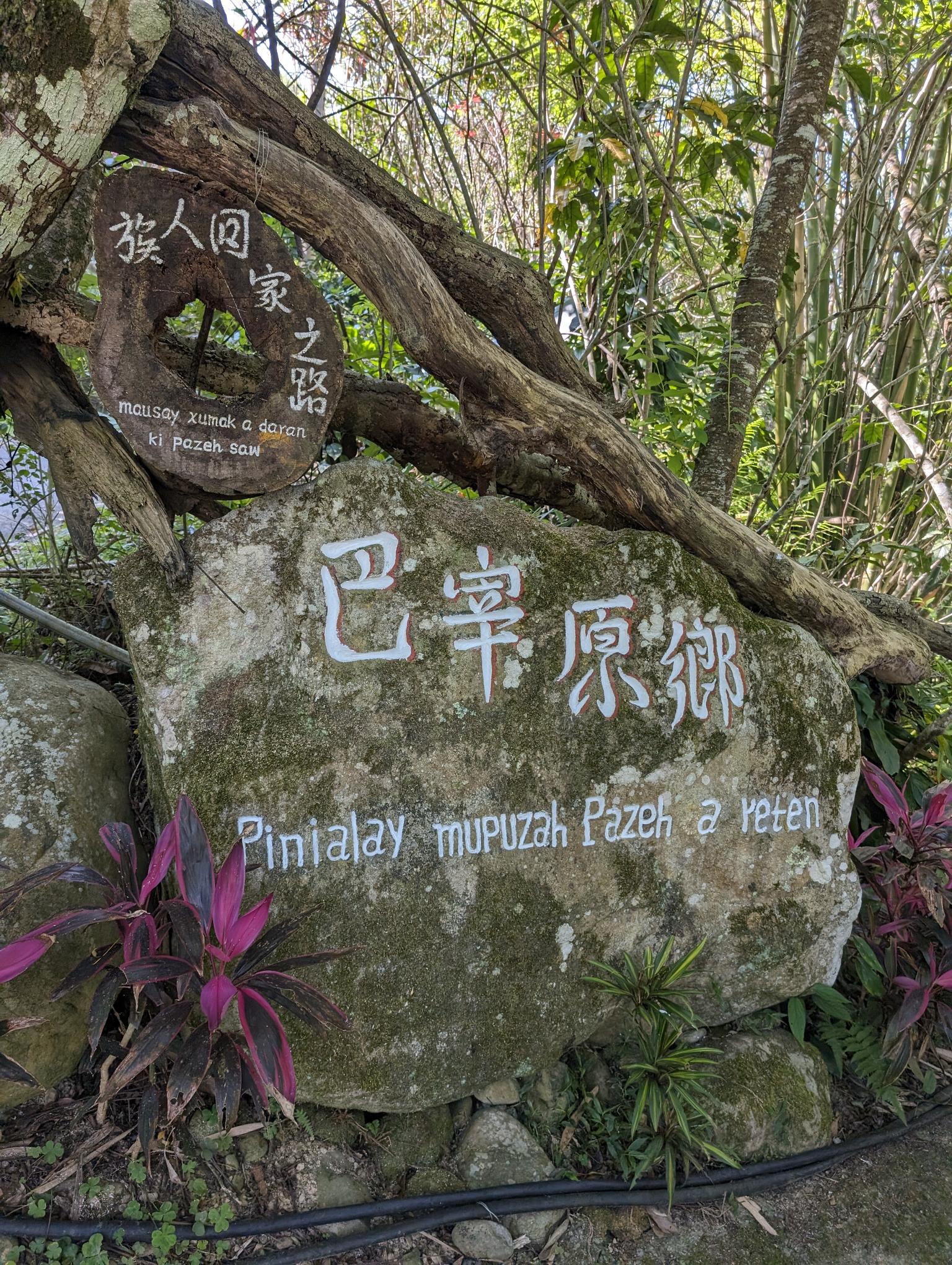
This pride also came out from 潘老师 Pān lǎoshī, a CNASH teacher who led the various drill groups at the school, and who took a major role in giving us an introduction to the culture of his clan, the Pazeh people, who originally lived in the mountains just outside of Puli. Teacher Pan took pains to emphasize to us that his clan was not recognized as one of the “official” Aboriginal groups, something that the clan (and others) have been working to rectify to receive an official status. Moreover, he and other leaders explained that their clan was forced out of their mountain home in 1957 by the Nationlist ROC government, and “Sinified” into Taiwanese culture in Puli and elsewhere.
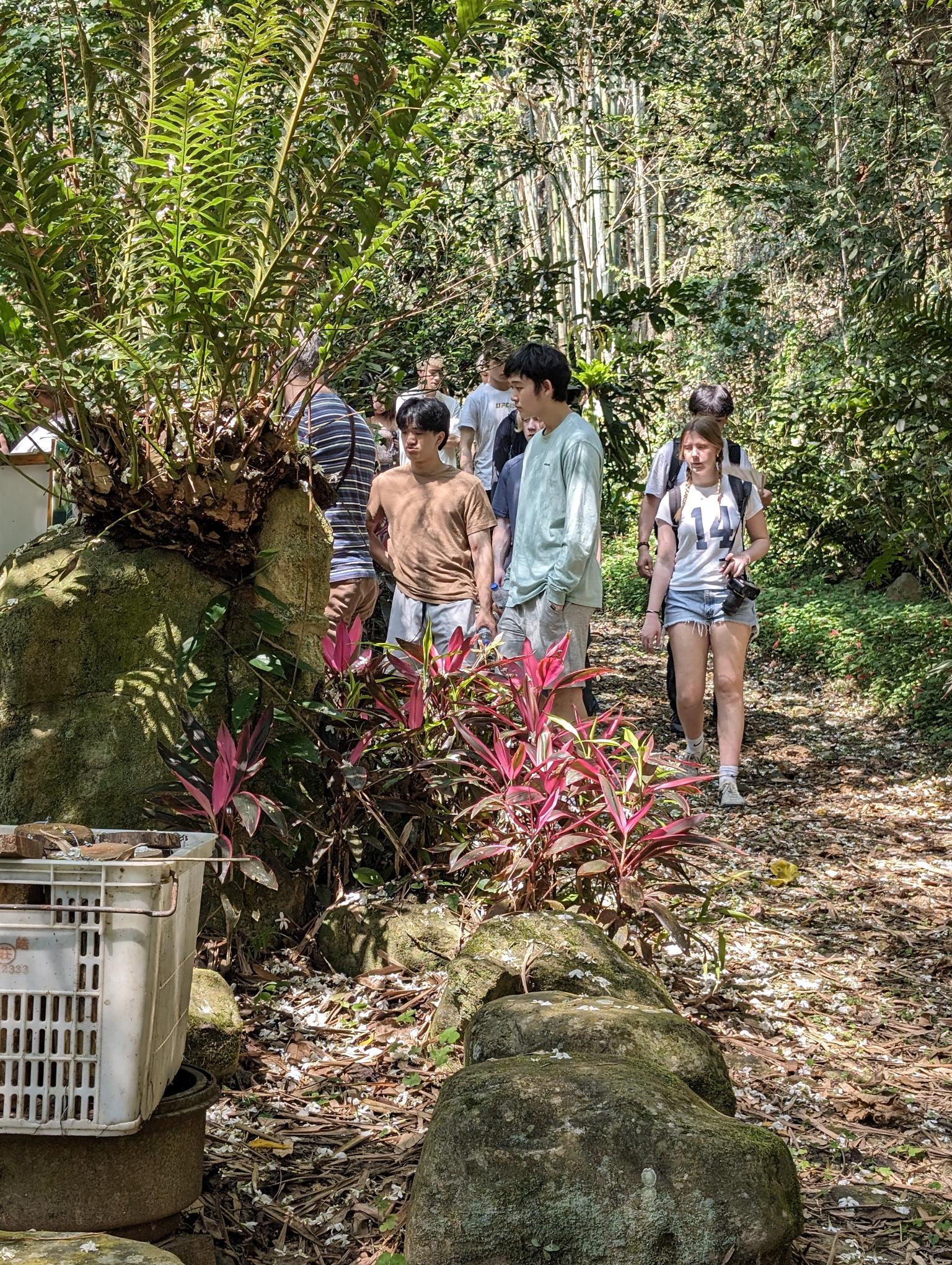
The clan’s work to reconstruct their original culture has come into fruition by the reconstruction of the Pazeh original village as a learning center for their culture. Our group climbed up the original mountain paths, and observed natural flora and fauna (or, at least, we heard the birds, as most of the wild animals kept out of sight.) Our guide demonstrated simple traps that we set to catch small birds and wild boar; the ingenious rock laying techniques that were designed to create sturdy foundations that have withstood many earth tremors over the years; fish and shrimp farming their ancestors would have engaged in; as well as showing us how they determined which vegetation was edible and which was not. Some of these techniques were truly cool. I was very impressed by the demonstration of pouring water over nearly (to my eye) identical looking fronds – water would spread over a poisonous plant, but would stay and roll down as round drops over an edible leaf. It reminded me of water-drop plastic-coated maze puzzles I would play as a kid. Amazing!
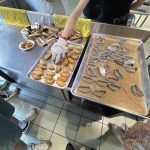
Toward the end of our visit in the mountain village, we were treated to be part of the process to make Alagway (spelling approximate!), and herbal infused stuffed glutinous rice dumpling which was wrapped in banana leaves and steamed. Here’s our group engaged in this laborious wrapping process. As we walked down the hill back to our bus, I got to chat with some of the “aunties” who helped the kids. As with my previous interactions with Aboriginal people, these ladies cracked jokes with each other and even with me, trying to teach me how to say things in both the Pazeh language and Taiwanese, and cracking up at my poor attempts! I finally managed to croak out a decent sounding version of “Alagway are delicious!” in a mix of Pazeh and Taiwanese.
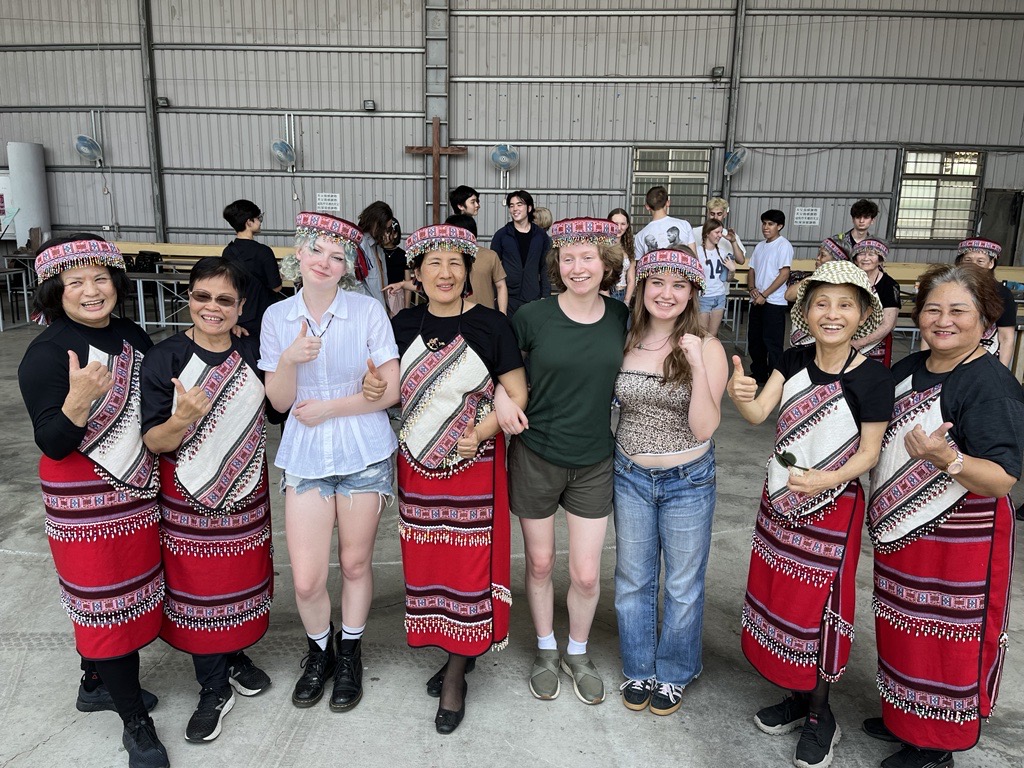
We returned to the church complex, where another group of aunties and grandmas had produced a veritable feast of Taiwanese specialities – this was home-cooking at its best, and simply one of the best meals we had in an 11-day trip full of amazing food. Astonishingly, they did want to accept any payment for this food, and wanted to show their appreciation of our students coming to their historical village to learn their culture traditions. We insisted on paying them something, but this level of welcome was really unique, even in Taiwan where everyone shows respect and warmth to visitors. But this warmth also comes with a sense of fun and good spirits, so after a brief show of these elders performing their ancestral songs and drumming, they insisted that we all try on their clan garments for pictures together with them. It truly was a moving sight – a small group of a repressed clan celebrating their culture with good food, singing, dancing, good humor and a deep wish to share with other people. It’s moments like this that keep bringing me back to Taiwan again and again.



Leave a Reply